
work / code university · 2020
Self-Driven Learning
A peer-to-peer learning platform that helps adults teach and learn from each other.
 empathize
 define
 iterative
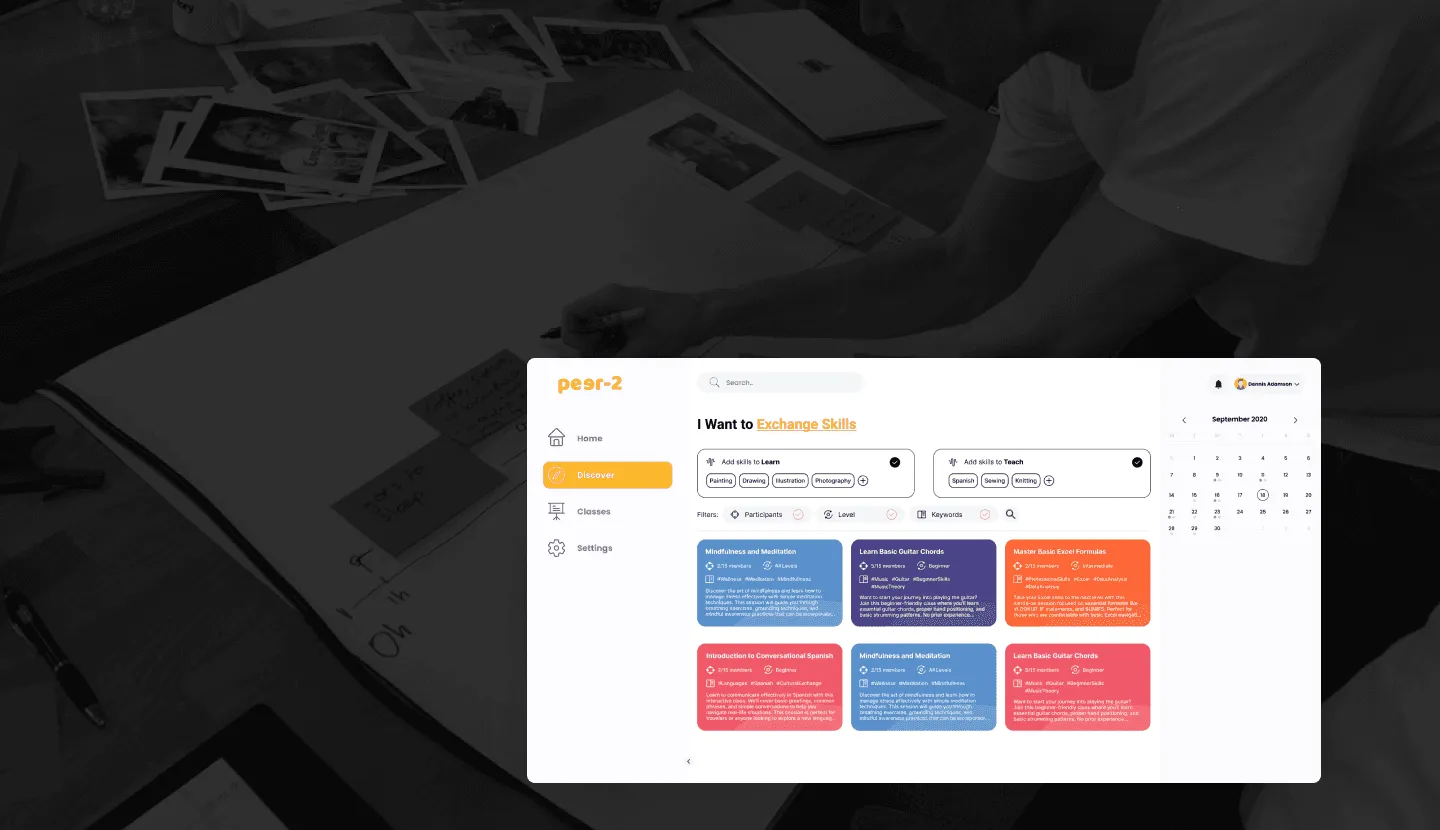
Traditional education fails many adult learners who need flexible, self-paced learning. Existing platforms either aren’t personal enough or are so structured that learners never build real autonomy or intrinsic motivation. Over eight months, our three-person team at CODE University set out to understand what actually makes self-driven learning work.
How might we create a learning environment that adapts to individual needs while fostering genuine self-direction and sustainable motivation?
Research
Standing on theory
I started with the literature on self-directed learning: Zimmerman’s self-regulation cycle (forethought, performance, reflection), Deci & Ryan’s self-determination theory (autonomy, competence, relatedness), and positive psychology in education. Three ideas carried through the whole project. Autonomy, competence and relatedness drive intrinsic motivation. Self-regulation can be practised. Feedback loops keep people going.
Talking to learners
I ran in-depth interviews with 12 adult learners across professional development, creative skills, academic study and personal interests.
insight #1
The autonomy paradox
- 80% wanted full control over their learning path
- 73% struggled without some guiding structure
- The sweet spot: guided autonomy with optional scaffolding
“I want to learn at my own pace, but I also need to know I'm on the right track. Complete freedom is actually paralyzing.”
— Participant 7
insight #2
Progress you can’t see
- 87% couldn’t judge their own skill development
- 65% abandoned goals for lack of visible progress
- Time spent and modules completed felt meaningless
“I spent hours studying, but I have no idea if I'm actually getting better at this. It's demotivating.”
— Participant 2
insight #3
The social learning paradox
- 92% learned better with some peer interaction
- 58% felt isolated learning purely alone
- What they wanted: optional community, never forced collaboration
“I don't want group projects, but I do want to see how others approach the same challenges. It gives me perspective.”
— Participant 5
Patterns and themes
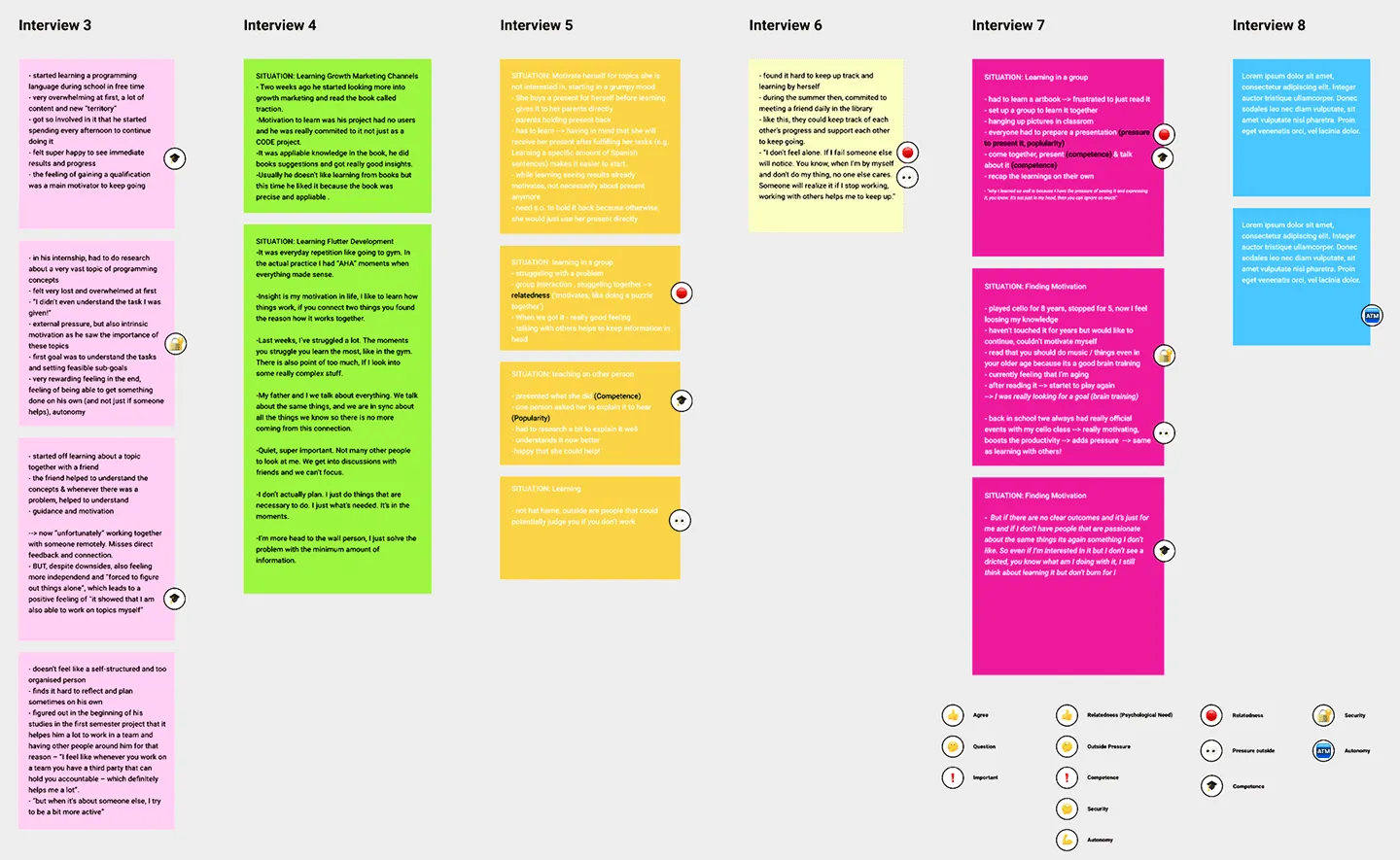
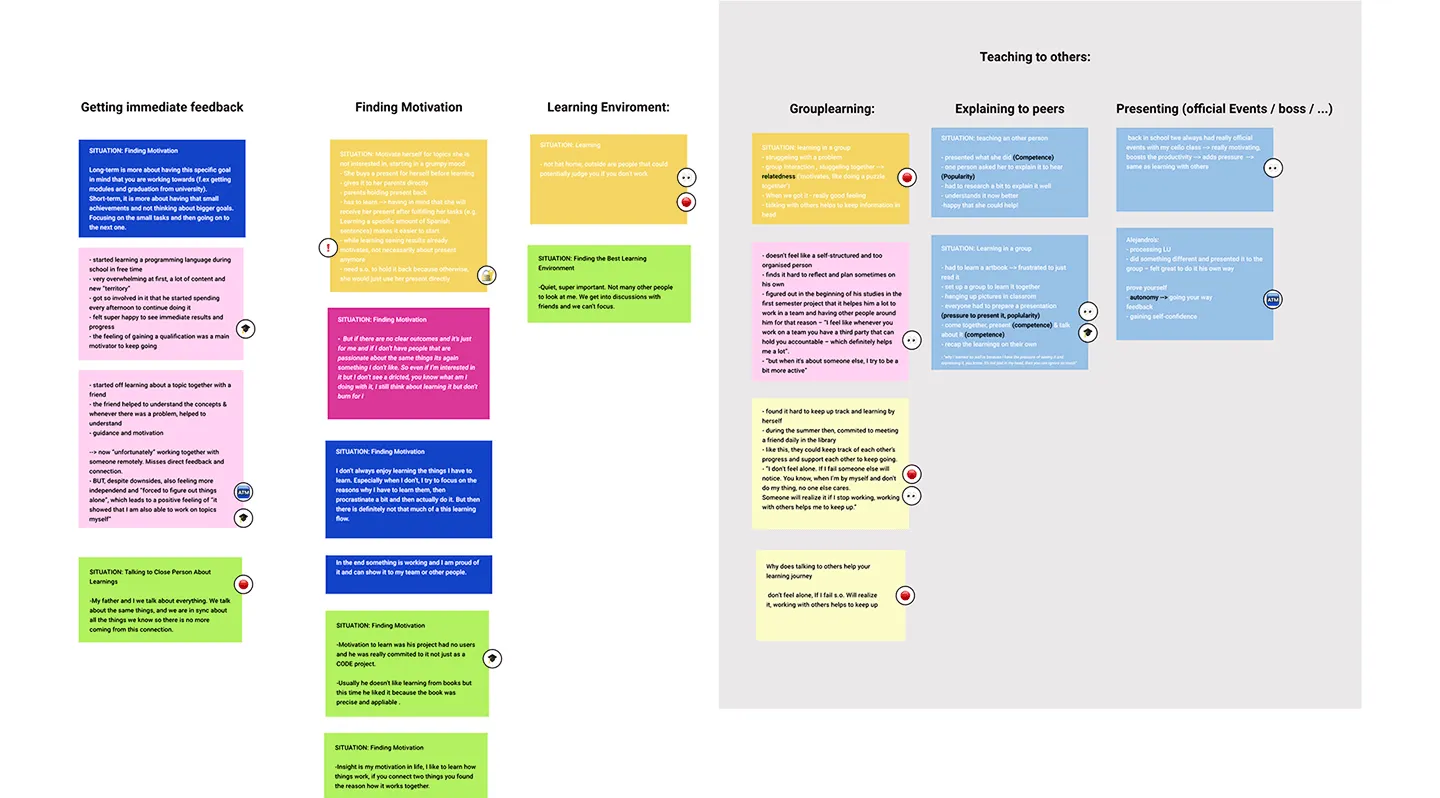
Clustering the data revealed four learner archetypes: the Explorer (32%), the Achiever (28%), the Collaborator (25%) and the Methodical (15%). Thematic analysis surfaced five forces behind learning success: relatedness, competence, autonomy, security and external pressures. I mapped them into a Structure Tree that let us form concrete hypotheses about what supports self-driven learning.
Two weeks of learning diaries
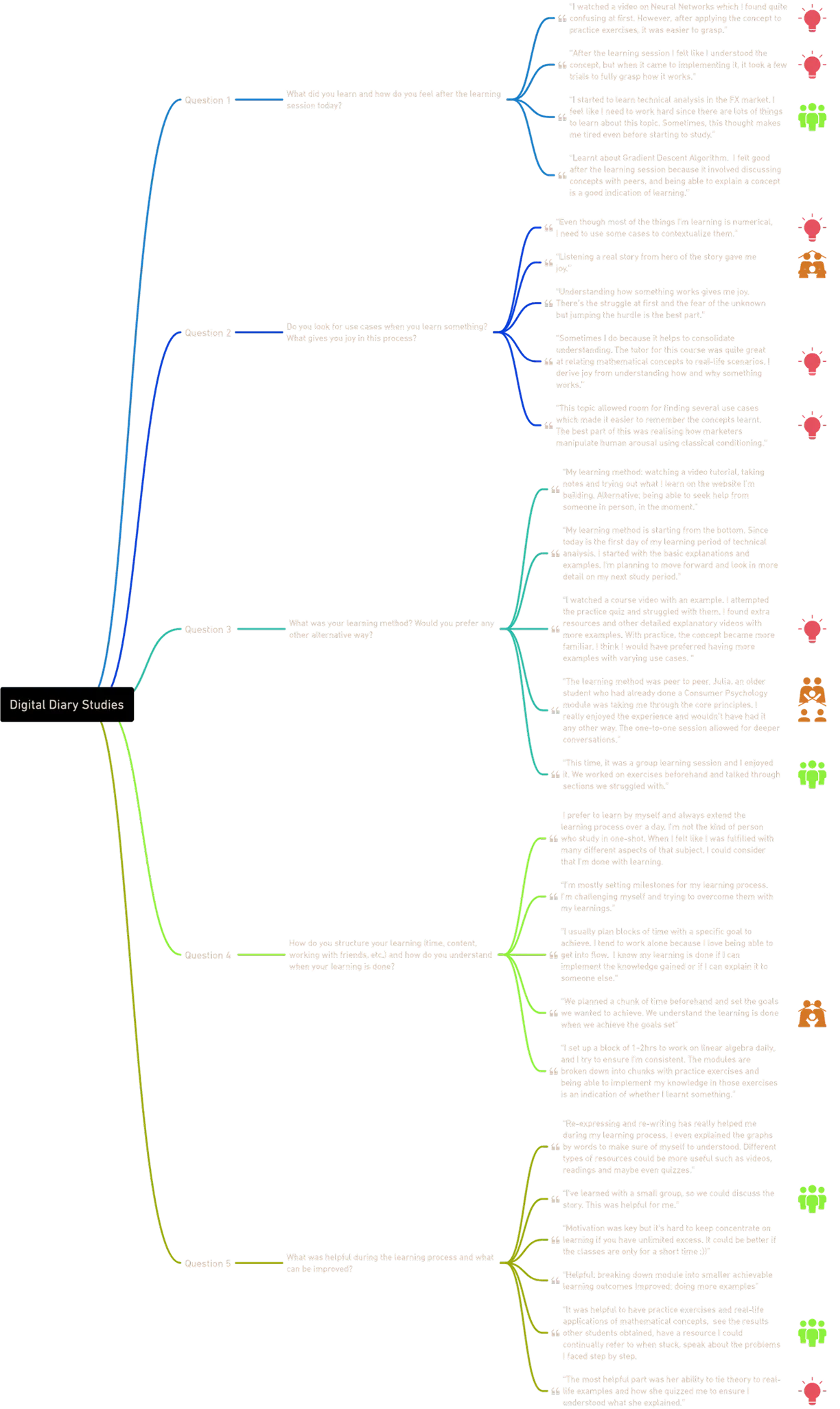
Interviews only capture what people remember. So I ran a 2-week digital diary study with 15 participants: daily 2–3 minute micro-surveys, weekly reflection prompts, and reports of significant learning moments. It captured the daily friction, the motivation dips and the breakthroughs that interviews missed.
Before the study we wrote down three hypotheses. Every diary entry was then tagged with the hypotheses it supported, so we could see which assumptions held up and which needed rethinking.
diary study · 15 participants · 2 weeks
What the learning diaries said
25 diary entries across 5 prompts, each tagged against our three hypotheses. Pick a hypothesis, a prompt, or a cell in the matrix to see the entries behind it.
| prompt | H1 | H2 | H3 | none |
|---|---|---|---|---|
Showing all 25 entries.
Q1What did you learn and how do you feel after the learning session today?
“I watched a video on Neural Networks which I found quite confusing at first. However, after applying the concept to practice exercises, it was easier to grasp.”
“After the learning session I felt like I understood the concept, but when it came to implementing it, it took a few trials to fully grasp how it works.”
“I started to learn technical analysis in the FX market. I feel like I need to work hard since there are lots of things to learn about this topic. Sometimes, this thought makes me tired even before starting to study.”
“Learnt about Gradient Descent Algorithm. I felt good after the learning session because it involved discussing concepts with peers, and being able to explain a concept is a good indication of learning.”
Q2Do you look for use cases when you learn something? What gives you joy in this process?
“Even though most of the things I’m learning is numerical, I need to use some cases to contextualize them.”
“Listening a real story from hero of the story gave me joy.”
“Understanding how something works gives me joy. There’s the struggle at first and the fear of the unknown but jumping the hurdle is the best part.”
“Sometimes I do because it helps to consolidate understanding. The tutor for this course was quite great at relating mathematical concepts to real-life scenarios. I derive joy from understanding how and why something works.”
“This topic allowed room for finding several use cases which made it easier to remember the concepts learnt. The best part of this was realising how marketers manipulate human arousal using classical conditioning.”
Q3What was your learning method? Would you prefer any other alternative way?
“My learning method: watching a video tutorial, taking notes and trying out what I learn on the website I’m building. Alternative: being able to seek help from someone in person, in the moment.”
“My learning method is starting from the bottom. Since today is the first day of my learning period of technical analysis, I started with the basic explanations and examples. I’m planning to move forward and look in more detail on my next study period.”
“I watched a course video with an example. I attempted the practice quiz and struggled with them. I found extra resources and other detailed explanatory videos with more examples. With practice, the concept became more familiar. I think I would have preferred having more examples with varying use cases.”
“The learning method was peer to peer. Julia, an older student who had already done a Consumer Psychology module was taking me through the core principles. I really enjoyed the experience and wouldn’t have had it any other way. The one-to-one session allowed for deeper conversations.”
“This time, it was a group learning session and I enjoyed it. We worked on exercises beforehand and talked through sections we struggled with.”
Q4How do you structure your learning (time, content, working with friends, etc.) and how do you understand when your learning is done?
“I prefer to learn by myself and always extend the learning process over a day. I’m not the kind of person who study in one-shot. When I felt like I was fulfilled with many different aspects of that subject, I could consider that I’m done with learning.”
“I’m mostly setting milestones for my learning process. I’m challenging myself and trying to overcome them with my learnings.”
“I usually plan blocks of time with a specific goal to achieve. I tend to work alone because I love being able to get into flow. I know my learning is done if I can implement the knowledge gained or if I can explain it to someone else.”
“We planned a chunk of time beforehand and set the goals we wanted to achieve. We understand the learning is done when we achieve the goals set.”
“I set up a block of 1-2hrs to work on linear algebra daily, and I try to ensure I’m consistent. The modules are broken down into chunks with practice exercises and being able to implement my knowledge in those exercises is an indication of whether I learnt something.”
Q5What was helpful during the learning process and what can be improved?
“Re-expressing and re-writing has really helped me during my learning process. I even explained the graphs by words to make sure of myself to understood. Different types of resources could be more useful such as videos, readings and maybe even quizzes.”
“I’ve learned with a small group, so we could discuss the story. This was helpful for me.”
“Motivation was key but it’s hard to keep concentrate on learning if you have unlimited excess. It could be better if the classes are only for a short time :))”
“Helpful: breaking down module into smaller achievable learning outcomes. Improved: doing more examples.”
“It was helpful to have practice exercises and real-life applications of mathematical concepts, see the results other students obtained, have a resource I could continually refer to when stuck, speak about the problems I faced step by step.”
“The most helpful part was her ability to tie theory to real-life examples and how she quizzed me to ensure I understood what she explained.”
What the diaries told us:
- Seeing real applications (H2) was the strongest signal. It came up in 7 of 25 entries and across 4 of the 5 prompts. Learners kept reaching for use cases and examples to make abstract material stick.
- Group structure (H1) mattered most when people reflected on what helped. Half of its evidence came from the “what was helpful” prompt. Groups helped when they happened, but few people described structuring their learning around one.
- Peers with shared goals (H3) had the thinnest evidence (3 entries). When it appeared, it was through one-to-one or goal-setting moments, not big study groups.
- 11 of 25 entries supported none of the three. Most of them were about self-structuring: time blocks, milestones, and “I know I’m done when I can explain it.” That pointed us to a gap our hypotheses had missed.
That last finding is where the Adaptive Autonomy idea came from: learners want to run their own structure, with examples and peers available when they choose to reach for them.
The problem, defined
The research came down to three challenges:
- The autonomy paradox: learners want control but need guidance
- Progress opacity: skill growth is hard to measure and see
- Motivation decay: without accountability, people quit
Designing the Adaptive Autonomy Model
The diary data became the foundation for the Adaptive Autonomy Model: a framework that gives learners more independence as they show competence. It rests on four principles: learner agency, competency-based progression, reflective practice and optional community.
Traditional LMS
- tried
- A structured course system
- learned
- “This feels like homework, not learning.” Structure without flexibility kills motivation.
- changed
- Loosen the structure
Complete freedom
- tried
- No structure at all
- learned
- “I don’t know where to start or if I’m improving.” Some guidance is essential.
- changed
- Bring guidance back, but adaptive
Adaptive autonomy
- tried
- A dynamic balance of structure and freedom
- learned
- “Finally, a system that grows with me.”
- shipped
- 78% satisfaction in prototype testing
Peer-2
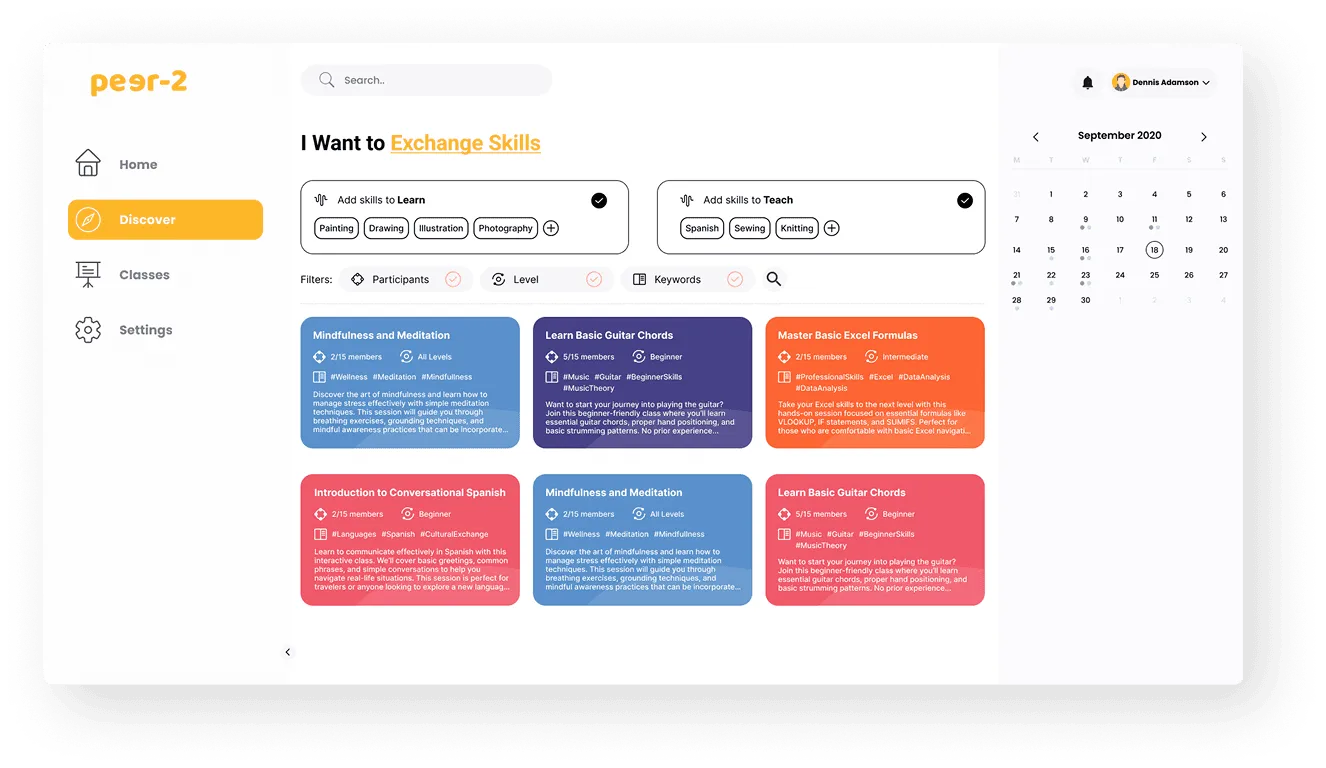
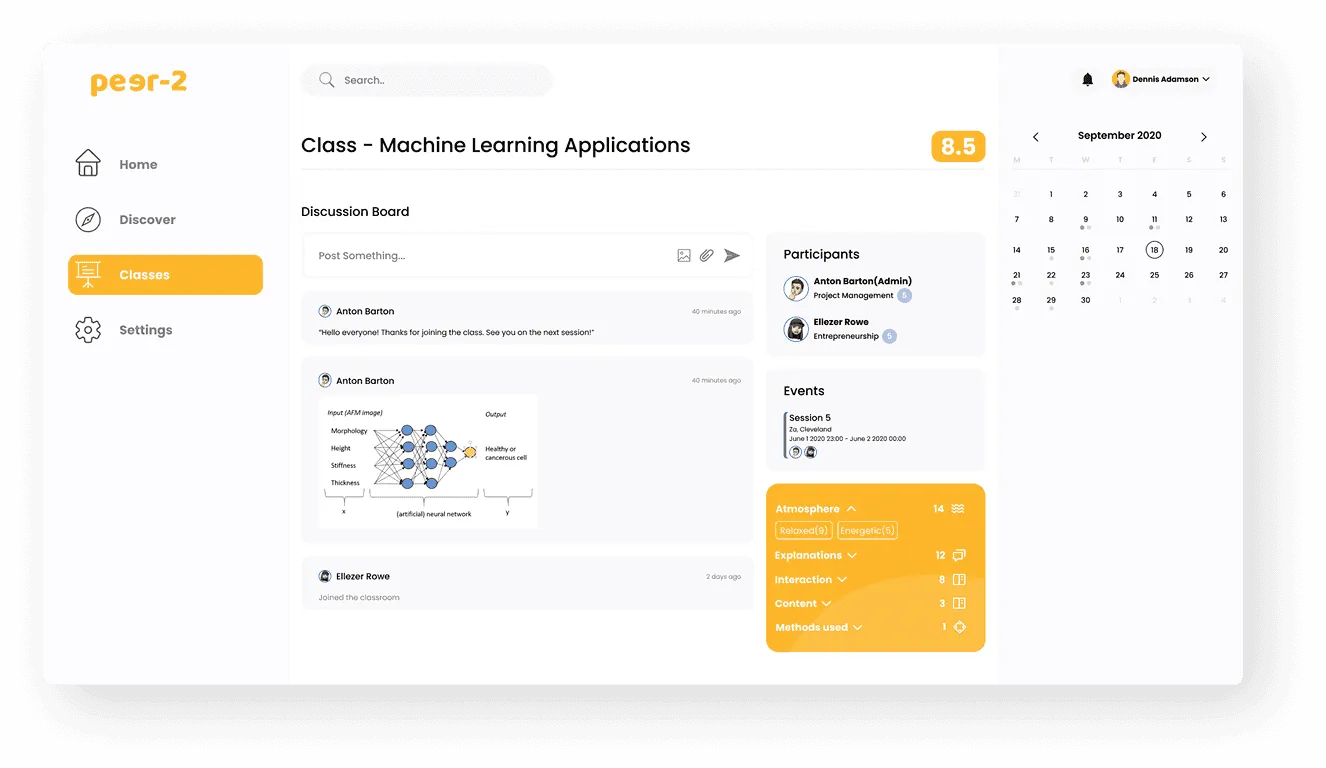
From this research I designed Peer-2, a knowledge-sharing platform where every user is both teacher and student. It matches people by skill and competency, turning passive content consumption into active co-creation of knowledge.
- 73%
- more peer learning engagement
- 78%
- satisfaction with the adaptive model in testing
- 12 + 15
- interview and diary participants
Reflection
This project changed how I think about user agency in educational design. Learners don’t want complete freedom or complete structure. They want the right amount of each at the right moment, matched to how far they’ve come.
Have a similar problem?
I help early-stage teams find what to build and ship it. Let's talk about yours.