
work / apryl · 2023
Empower Parenthood
A parenting platform that reduces stress through community-driven support and smart resource discovery.
 empathize
 collaboration
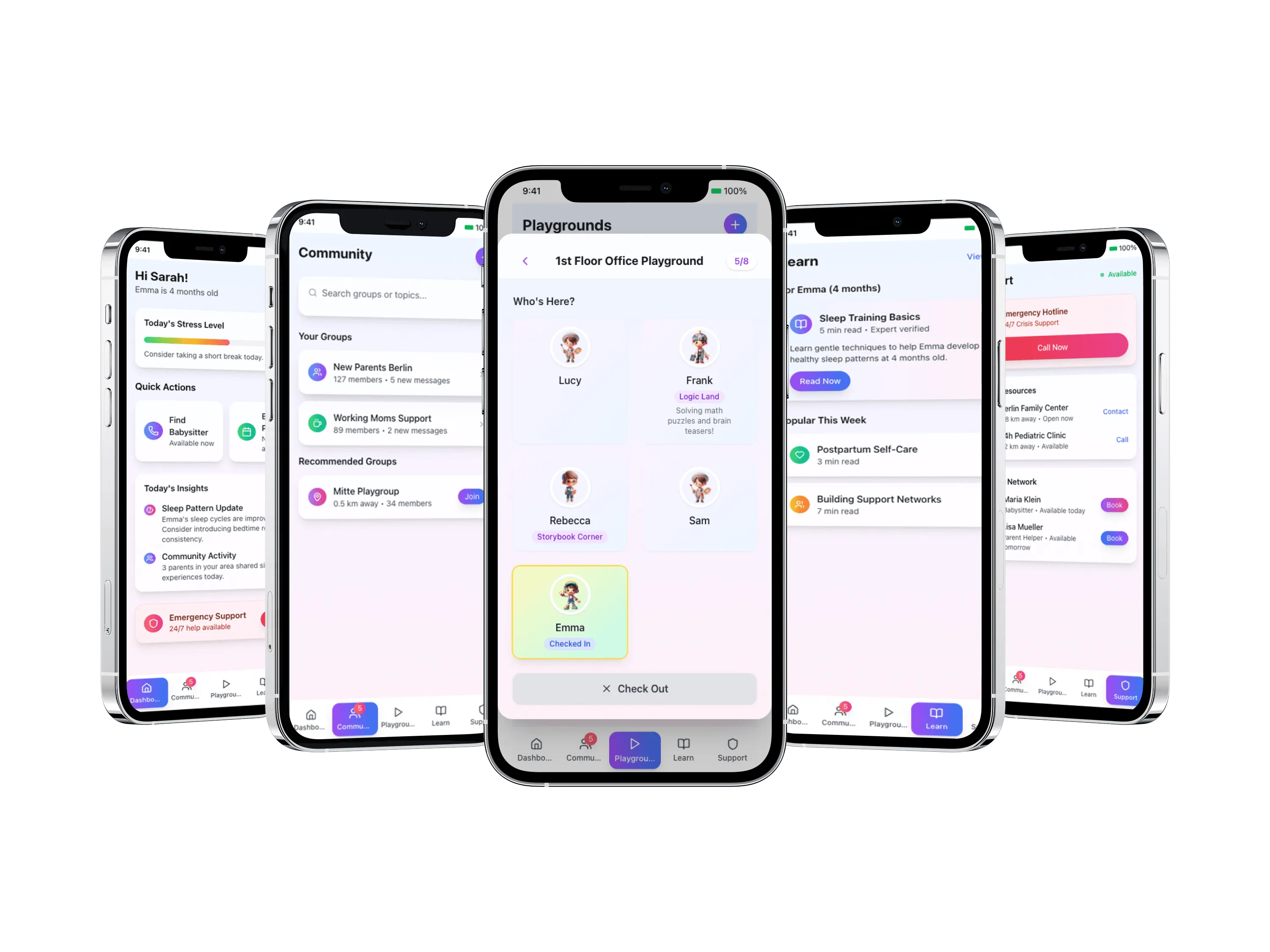
Empower Parenthood is a parenting support platform that reduces parental stress through community connections and smart resource discovery. It started as a broad, five-module app, and research turned one module, Playground Discovery, into the heart of the product.
The challenge
73% of new parents report feeling overwhelmed by information overload, time pressure and isolation in their first year. The tools that exist are scattered across many platforms, which adds stress instead of removing it.
How might we create a unified platform that reduces parental stress while building meaningful community connections?
Research
I ran 8 semi-structured interviews with working parents about their daily challenges, coping strategies and unmet needs.
insight #1
The unexpected disrupts everything
- Every participant struggled with unexpected situations
- Childcare emergencies regularly derail daily routines
- Without a backup plan, stress compounds fast
“It's so often that you'd like wake up in the morning and suddenly your child was sick, or something's happened in kindergarten, or kindergartens are not open every day.”
— Participant 1
insight #2
Support systems make or break it
- Supportive partners, employers and peer networks were critical
- Flexible work arrangements tracked closely with lower stress
- Community gave both emotional and practical support
“For an employer to be flexible and to be understanding, like this is how I can be a valuable part of the workforce.”
— Participant 2
insight #3
Societal pressure creates mental barriers
- Traditional expectations force a false choice between career and parenting
- Working mothers face credibility challenges at work
- Mental blocks stop parents from asking for help
“Historically society has said that if you have children, you can't really have a career anymore, which is not true these days. But I think that's more like a mental block, and there's not really support around that.”
— Participant 7
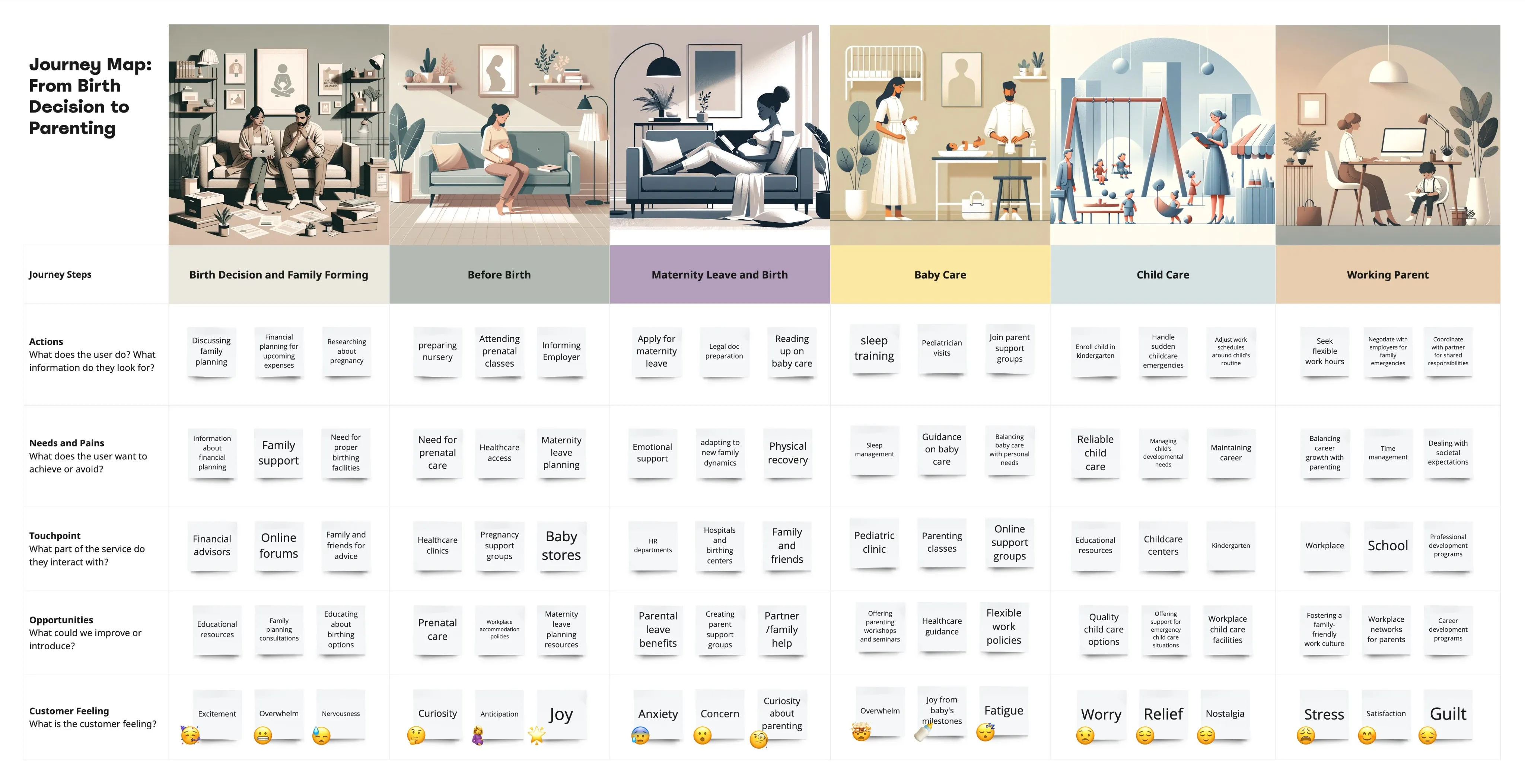
Journey map
From the interviews I mapped the parent journey from family planning to work-life balance, and found 12 critical touchpoints where the right support could lower stress.
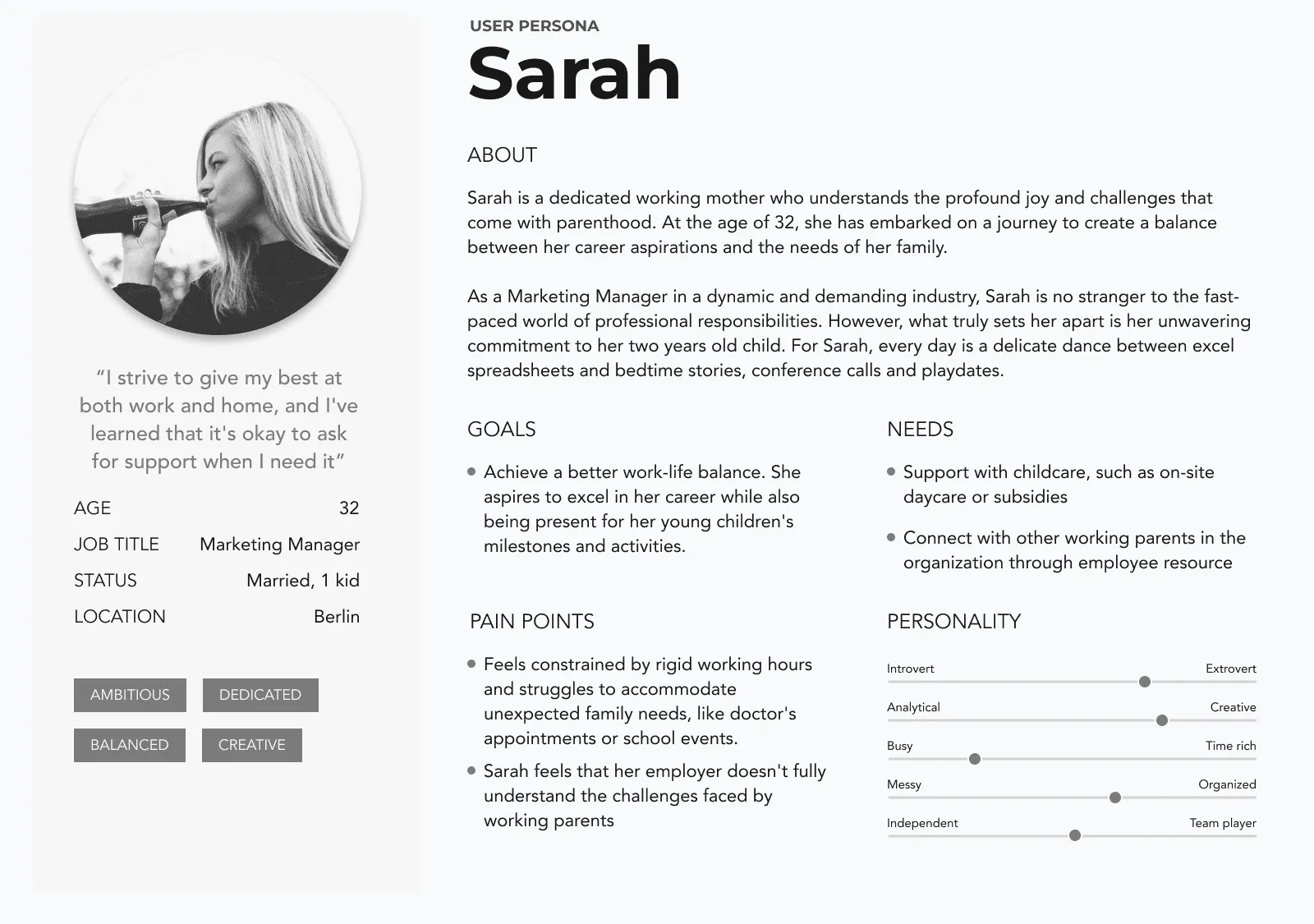
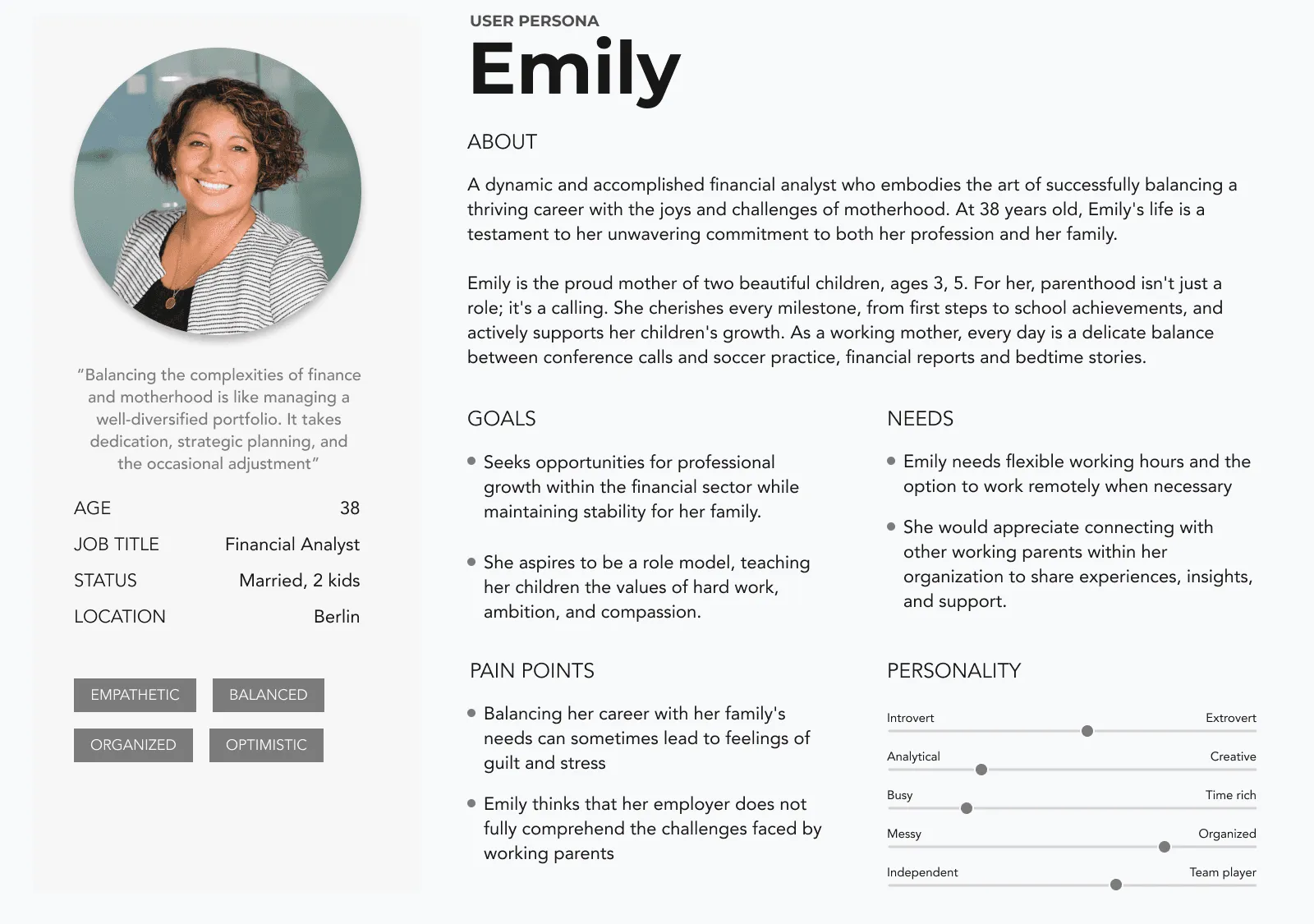
Personas
Two primary personas came out of the research patterns.
What the clusters said
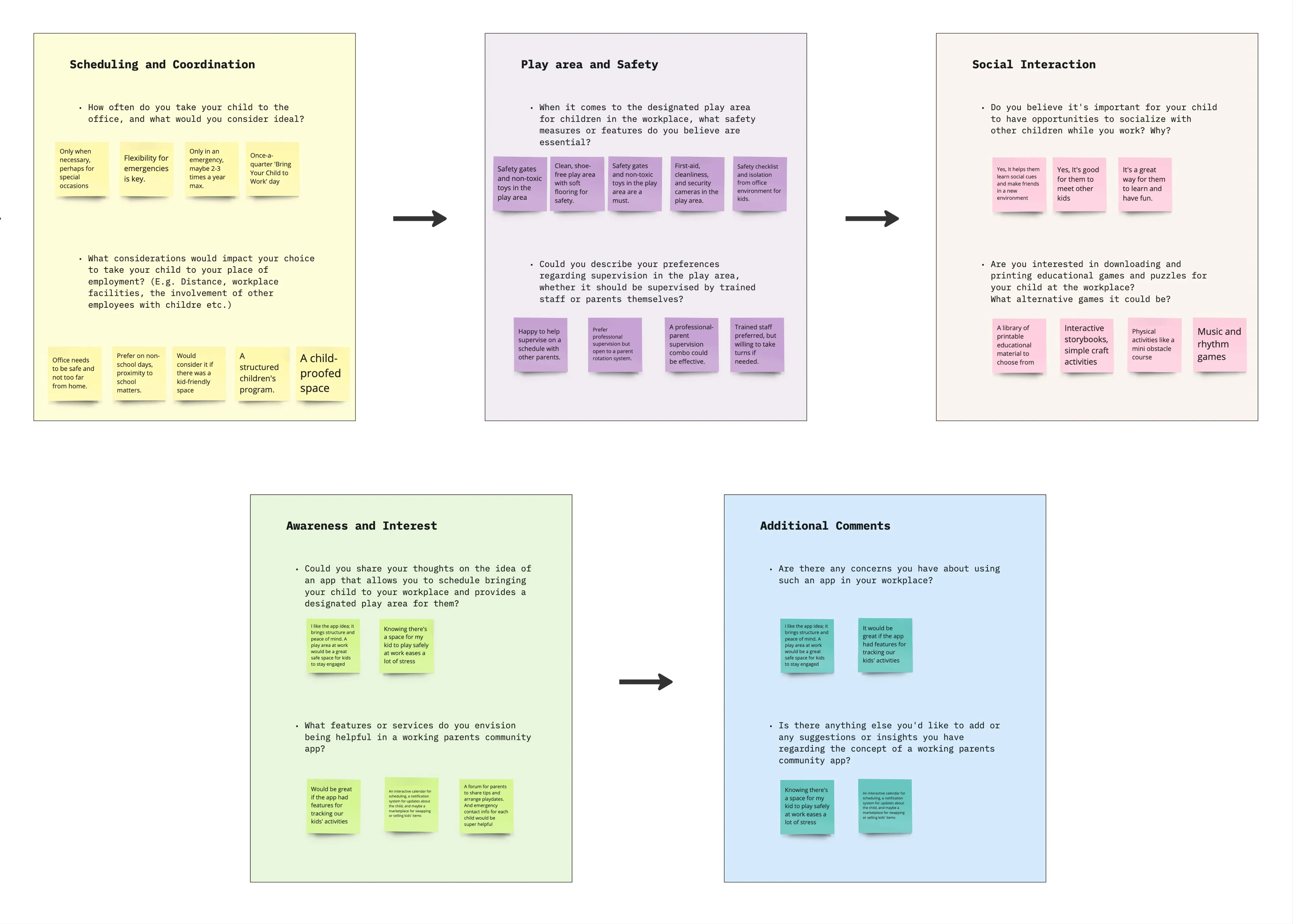
Affinity mapping kept pointing to the social side of working parenthood, for parents and children alike: worries about playground safety and supervision, a strong wish for engaging, educational activities at the workplace, and the need for one place to book childcare slots.
Defining the product
New parents needed one place with curated, trustworthy information, community with similar parents, practical tools for daily life, and emergency support for the unexpected. I structured it as five pillars: Playgrounds, Learn, Connect, Organize and Support. Four principles guided the design:
- Simplicity first: lower cognitive load in stressful moments
- Community-driven: peer support over expert advice
- Contextual help: the right information at the right time
- Inclusive: works for every family structure
Success targets were set up front: 30% lower reported stress, 50% more community engagement, 60% better information access.
The pivot: playgrounds
Testing showed that parents’ most immediate, most frequent need was finding safe, age-appropriate play spaces. 78% struggled to find a suitable playground near work, they spent 2+ hours researching across platforms, and nothing offered real-time availability or social context. So I focused most of the development and testing on the Playground Discovery & Booking system.
The idea: a secure playground integrated on site, so on the days a child has to come to work, parents can work nearby while the kids play, and parent colleagues get a natural way to meet.
 discover
 who’s here
 activities
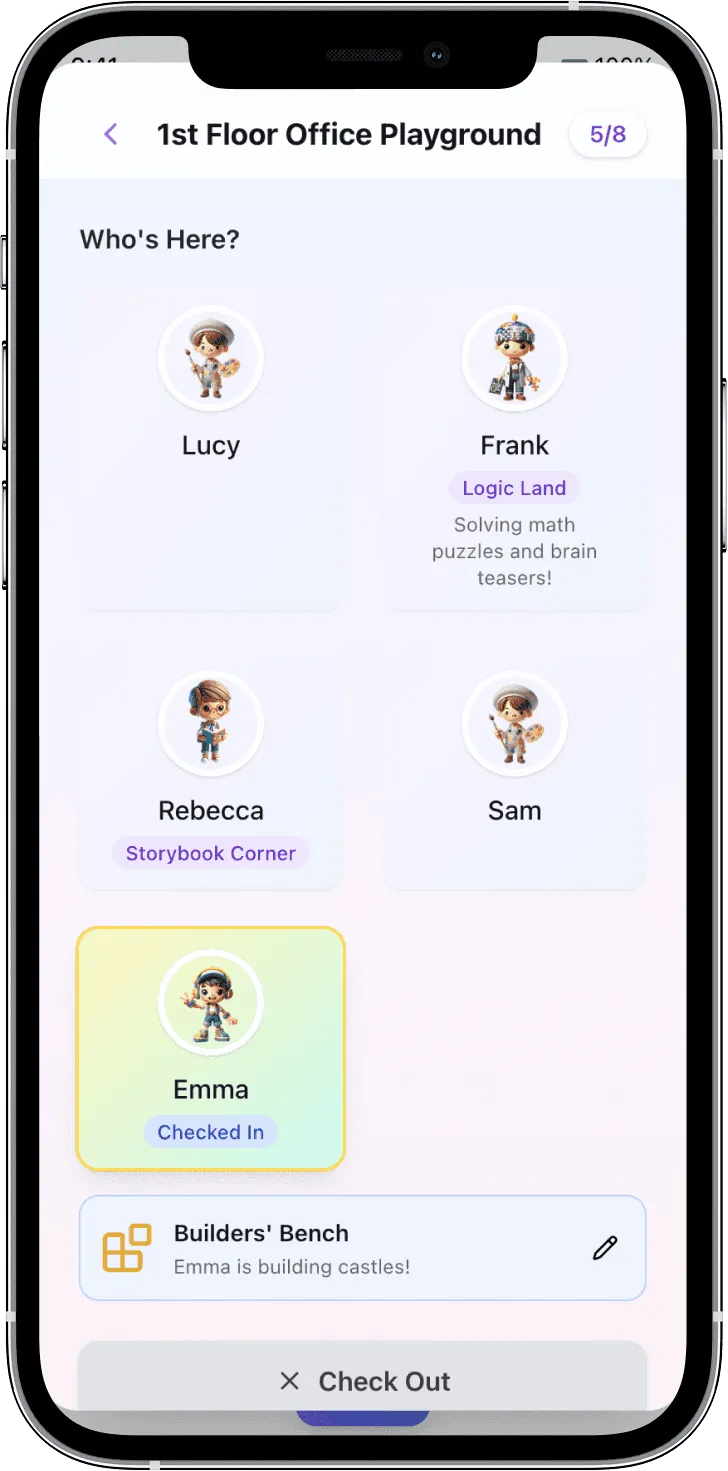 check-in
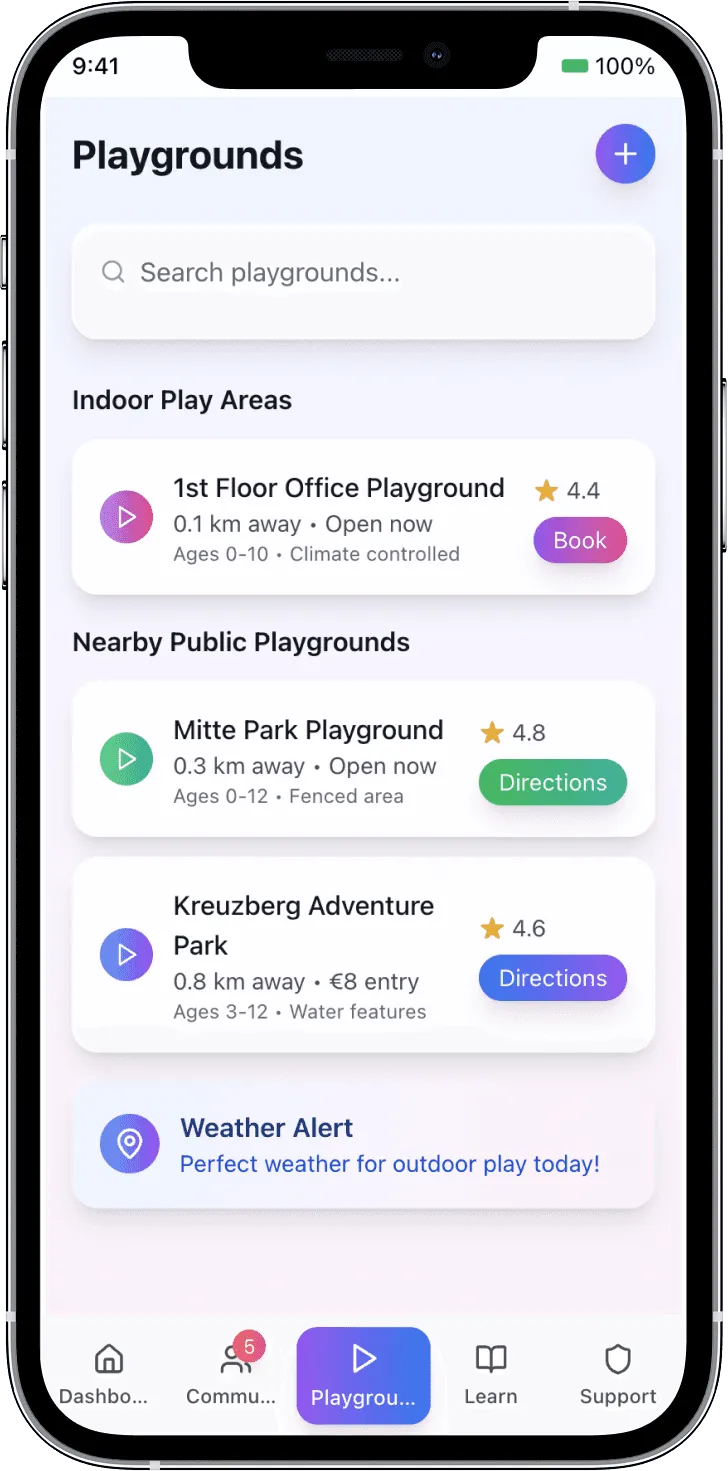
- Smart discovery: indoor and outdoor venues, distance sorting with travel time, community safety ratings
- Real-time booking: live availability over WebSockets, capacity tracking, calendar-linked confirmations
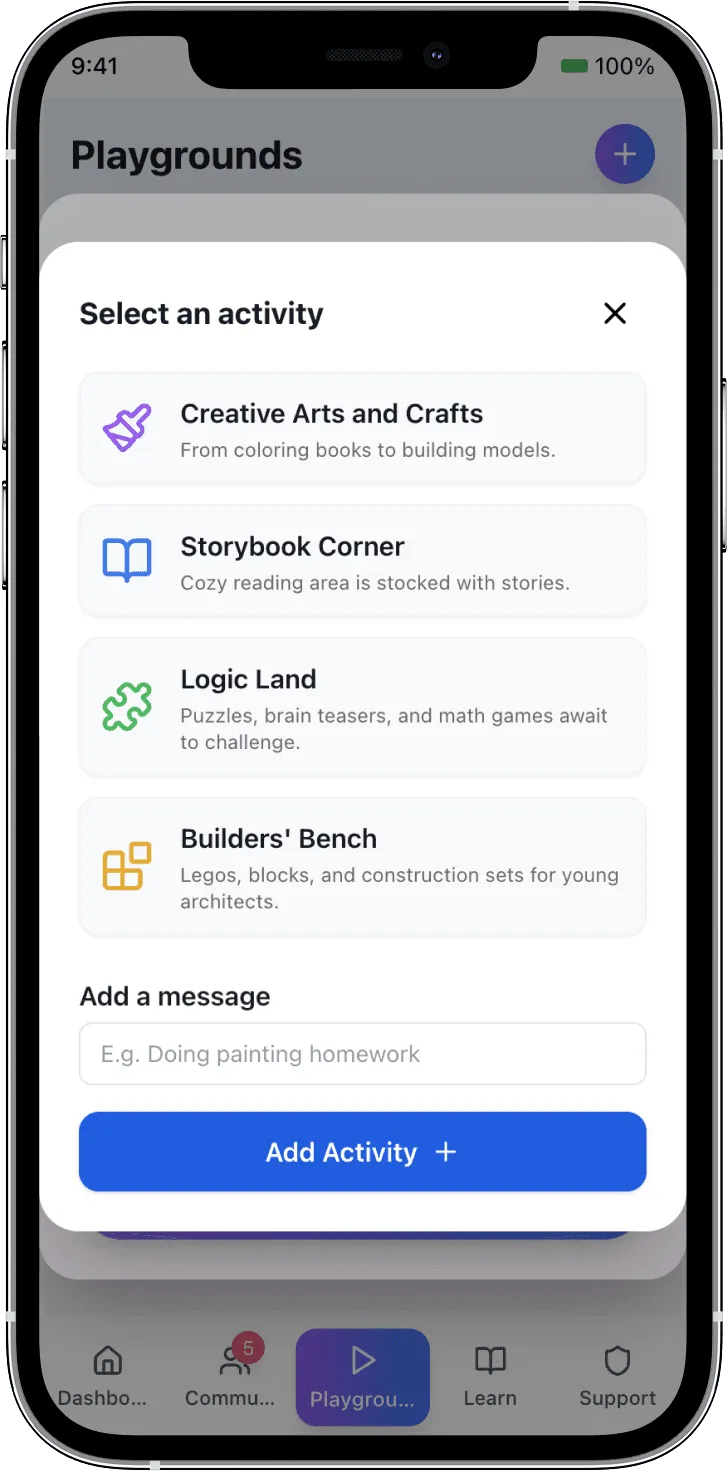
- Activity zones: custom activities, with status sharing (“Emma is building castles!”)
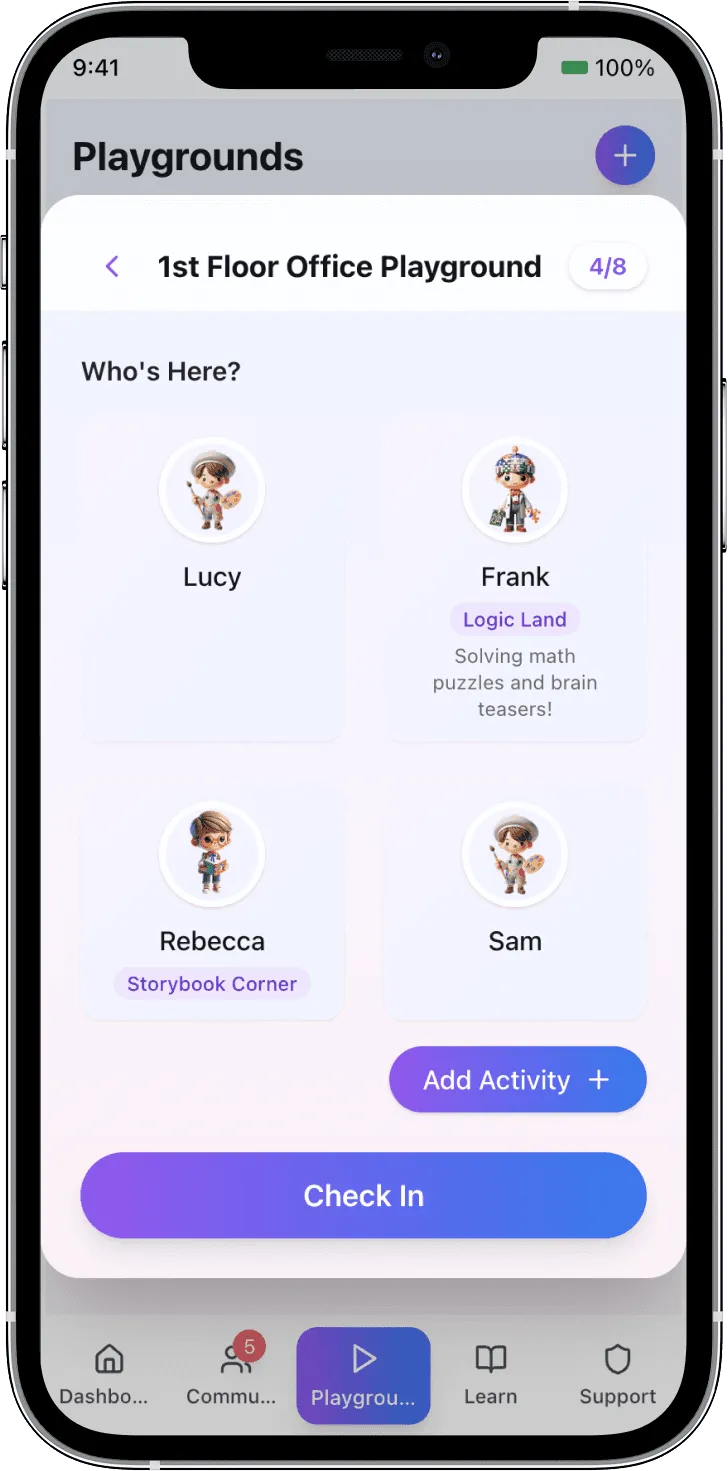
- Social presence: a live “Who’s Here” display, parent networking and playdate scheduling
Testing
I built a fully functional React prototype and tested it with 12 parents of children aged 6 months to 8 years. Testing ran over 3 weeks, mixing moderated remote sessions and in-person playground visits, across four tasks: discover, book, connect and manage.
- 92%
- found real-time availability “extremely helpful”
- 89%
- checked “Who’s Here” before visiting
- 73%
- started conversations with other parents
- 56%
- scheduled follow-up playdates
What changed after feedback
Information overload
- tried
- Show every venue detail up front
- learned
- Parents felt overwhelmed by information
- changed
- Progressive disclosure with a clear key-info hierarchy
Community trust
- tried
- Open forums for every discussion
- learned
- Parents hesitated to share personal struggles
- changed
- Tiered privacy levels and organisation-based communities
Social adoption
- tried
- Social features tucked away in settings
- learned
- Low engagement with the community side
- shipped
- A prominent “Who’s Here” with activity sharing
Reflection
This project taught me to let research steer the product instead of forcing a solution I’d already picked. Pivoting from a broad parenting platform to a playground-focused community tool only happened because the research pointed there.
Have a similar problem?
I help early-stage teams find what to build and ship it. Let's talk about yours.